Lerner and Loewe–Brigadoon
We have often discussed the work of Lerner and Loewe in the posts on this page; but, as we look back, the comments were fragmented over many posts. We thought it would be best to go back and look again, this time in a unified manner, much like we did for Annie Get Your Gun, The Band Wagon and Kiss Me, Kate. From the standpoint of time, we need to remind everyone that we are looking at this in sequence, but not based on the dates of the Broadway opening nights. For better or worse, we started in 1940 looking at a series of MGM movie releases where Conrad Salinger was the orchestrator or arranger. Please click on the following link to learn about Cheryl Crawford and read more about Lerner and Loewe.
Because we get 20-30 new followers each day, let’s go back and review how Frederick (“Fritz”) Loewe came to America. He was born in Berlin on June 10, 1901. He studied piano in Berlin with Ferruccio Busoni and Eugene d’Albert, and worked on composition and orchestration with Emil Nikolaus von Reznicek. At 13, he became the youngest piano soloist to appear with the Berlin Symphony Orchestra. In 1924, he moved to the United States. In 1938, he composed his first full Broadway score, The Great Lady, in collaboration with Earle Crooker. The show ran only 20 performances.
It was a chance meeting at the Lambs Club in 1942 that brought Alan J. Lerner and Fritz Loewe together. According to the New York Times, Henry Duffy had asked Loewe to write a new libretto and update the lyrics of Salute to Spring for a production in Detroit (also known as Life of the Party). The composer, who admired some lyrics Lerner had written for a Lambs Club revue, introduced himself, and two days later the two men left for Detroit.
Their next show, What’s Up? (1943) was staged by George Balanchine but lasted only 63 performances. Their third show, The Day Before Spring (1945), ran for 165 performances.
”We could feel the movement in the structure of our work, and it wasn’t termites,” the composer later quipped.
Their next show, Brigadoon (1947), was their first great hit and was followed by Paint Your Wagon (1951), My Fair Lady (1956), the movie Gigi (1958) and their final original show on Broadway, Camelot (1960). While Loewe’s output could not match the amount of music created by other major composers, there is no question that what he did write was excellent.
Alan J. Lerner is something of an enigma, in that he could write like an angel at times but not all of the time. I worked with a member of the cast from the failed attempt, 1600 Pennsylvania Avenue (1976), with music by Leonard Bernstein, to see if we could “doctor” the script, the way Abe Burrows helped Jo Swerling on Guys and Dolls. It is hard to believe that the same man could write librettos that were so far apart in substance and philosophical center as were Brigadoon and 1600 Pennsylvania Avenue.
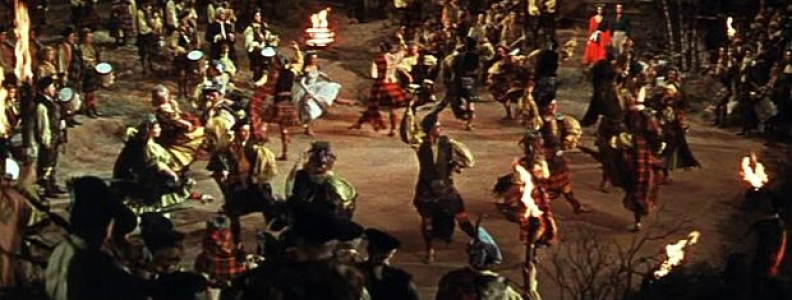
Brigadoon was turned into a movie and released in 1954, with a wonderful cast that included Gene Kelly and Cyd Charisse. It has become an icon of the musical movie heritage from MGM; however, from the standpoint of our Broadway heritage, we will rely heavily on the John McGlinn restoration recording in 1992.
In our post on April 10, 2017, we noted that we are indebted to music theatre historian, Miles Kreuger, for his explanation that Brigadoon is based upon an old Wilhelm Gerstacker story from 1862. You can read Miles Kreuger’s recollections in the liner notes for the John McGlinn recording, released by EMI/Angel in 1992. While the story developed by Alan J. Lerner for Brigadoon is quite different, the basic theme remains the same: a town, not found on modern maps, appears once every 100 years to human sight but for one day only. The rules are fairly simple; the people of the town must remain within its boundaries or the spell will be broken and all will die. A stranger can come into the town and stay or leave, as long as it is within the one day. But if the stranger stays, he or she must abide by the rules of the town and can never leave again.
In the musical Brigadoon, two Americans, Tommy and Jeff, are lost in Scotland and stumble on the “lost” town of Brigadoon. As they wander through the town, they are surprised by the ancient styles of the clothing and the friendliness of the people. Tommy falls in love with a girl in the town, named Fiona, but decides at the end of the day that he is not prepared to give up his life in New York to stay with Fiona in Brigadoon.
However, once Tommy returns to New York, he finds his life and the lives around him to be inconsequential and without meaning. He packs his bags and drags Jeff back to the spot in the forest where they got lost. Of course, nothing is there. Jeff can’t believe the village ever existing, while Tommy discovered something: he found that sometimes “what you believe in becomes more real to you than all the things you can explain away or understand. God! Why do people have to lose things to find out what they really mean?”
Of course, the musical doesn’t end here, for Tommy’s love of Fiona is so strong that it wakes up Mr. Lundie from his sleep; the chorus starts to sing Brigadoon; and Tommy is welcomed back to Brigadoon, where he crosses over the bridge into the eternal mist.
Before we concentrate on show itself, we would first like to introduce you to its producer, Cheryl Crawford. Crawford majored in drama at Smith College and went on to become one of the most influential people in modern American theatre. We know that few people have ever heard of her and must be questioning why we consider her contribution to be so unique.
Crawford didn’t produce that many plays or musicals; however, according to Wikipedia, she made an indelible mark, nevertheless. She was part of The Theatre Guild; started The Group Theatre with Harold Clurman and Lee Strasburg in 1931; jump started the careers of Kurt Weill and Paul Green; was influential in the careers of Helen Hays, Bill “Bojangles” Robinson, Mary Martin, Ethel Barrymore, Ingrid Bergman, Tallulah Bankhead and Paul Robeson, among others; founded the American Repertory Theatre in 1946 with Eva Le Gallienne; and co-founded The Actor’s Studio with Elia Kazan and Robert Lewis in 1947.
In her spare time, she co-produced the Broadway musical version of Porgy and Bess in 1942 (not the original opera, which was produced at The Theatre Guild in 1935), produced One Touch of Venus in 1943, Brigadoon in 1947, The Rose Tattoo in 1951, Paint Your Wagon in 1951 and Sweet Bird of Youth in 1959. We may not have heard much about Cheryl Crawford, but that is a pity; she stands tall in the history of American theatre.
Stay with us, because we are about to present the musical, song by song.