
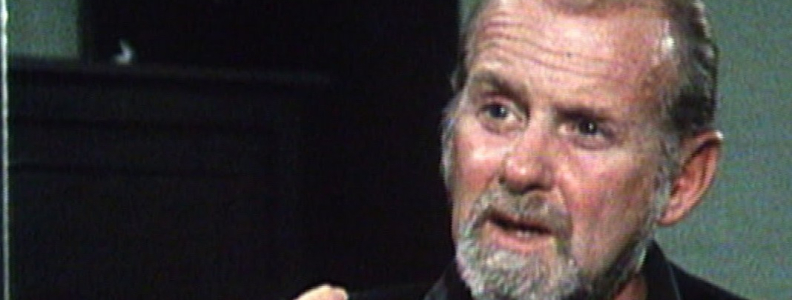
Dancing Onstage and in the Movies–Part Fifteen: Bob Fosse
We are about to end our series on dancing in musicals, onstage and in the movies. We started with Fred Astaire and Hermes Pan, and we are going to end with a multi-part set of posts on Bob Fosse. Are we omitting other choreographers, like Jack Cole, who influenced Fosse’s work? Unfortunately, we are. We try to cover some key people in an overview; but nothing we write is all-encompassing. We try to hit the high points so that, if you are interested, you can do what my friend, John Baran, calls a “deep dive into the details.”
Now that we have apologized in advance for our shortcomings, let’s take a quick look at Fosse’s influence. Well, maybe that was poor phrasing, because Fosse’s influence was wide and broad. He did not study with any well-known ballet masters, as far as we can tell. In fact, he started as a dancer in a team with Charles Grass and then with his first wife, Mary Ann Niles. He and Mary Ann were featured in Call Me Mister, a Harold Rome revue that opened on Broadway in 1946. Jules Munshin was also in the cast, who we remember as the waiter in Easter Parade and the third sailor in On the Town. Fosse went to Hollywood to become an actor; we have seen him in Kiss Me, Kate, with Kathryn Grayson and Howard Keel.
Not making great progress as an actor, Fosse was persuaded to return to Broadway in 1954 to choreograph The Pajama Game, which he followed up in 1955 with the choreography for Damn Yankees. (He would go on to choreograph both movie adaptations.) In 1957, he choreographed Gwen Verdon in New Girl in Town, Bob Merrill’s musical adaptation of Anna Christie; and in 1960, he both directed and choreographed the musical, Redhead, starring Gwen Verdon (her third Tony for best actress and his third Tony for best choreography). He continued to work with Verdon as director/choreographer in Sweet Charity in 1966 and Chicago in 1975. He also was director/choreographer for the original production (in 1973) of Pippin.
He also choreographed the original production of Bells Are Ringing in 1957, the original 1961 production (with Robert Morse) of How to Succeed in Business Without Really Trying and the original production of Little Me in 1963.
He directed the movie adaptation of Sweet Charity in 1969 and Cabaret in 1972, for which he won the Oscar for Best Director over Francis Ford Coppola, who had been nominated for his first film, The Godfather. Somehow, we doubt that vote would come out the same if it were held today.
After suffering a massive heart attack, Fosse co-wrote and directed the movie All That Jazz in 1979, in which he took a hard look at the excesses of a man Wikipedia characterized as a “womanizing, drug-addicted, choreographer-director in the midst of triumph and failure.”
His first two marriages ended in divorce; the first in 1951 and the second (to Joan McCracken) in 1959. He had met Gwen Verdon in 1955 when they worked together on Damn Yankees; they were married in 1960 and separated in 1971 but remained married until his death in 1987. According to Wikipedia, he and Gwen were planning to attend the opening of a revival of Sweet Charity at the National Theatre in Washington, DC. “Verdon held him in her arms as he suffered a fatal heart attack on the sidewalk outside the Willard Hotel as the revival of Sweet Charity was beginning across the street. He was taken to George Washington University Hospital, where he was pronounced dead.”
Who would be better than Gwen Verdon to explain Fosse’s dancing ability and style. Here is an eight minute clip that we came across, featuring comments from Gwen that relate to video clips from some of Bob’s performances.