Judy Garland: She Started and Ended with Harold Arlen
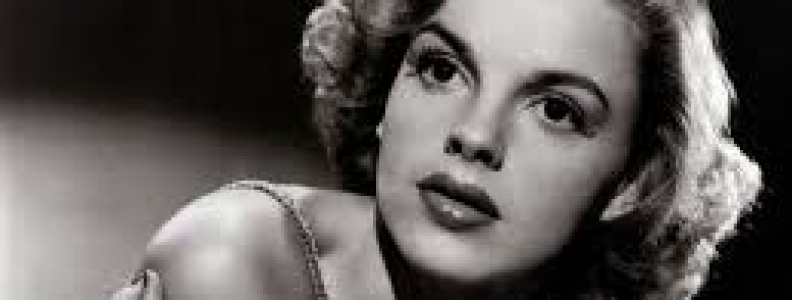
We can make a strong case that between 1937 when The Broadway Melody of 1938 was released and 1950, when Judy was replaced in Annie Get Your Gun, the MGM studio used and abused this great talent, grinding out everything from Andy Hardy movies to smash hit musicals. Judy was unique–never sure of herself despite her enormous talent, half child and half woman, fragile, vulnerable and courageous. Judy was signed at age 13 (in 1935) and was tossed out of MGM in 1950, 15 years later. Bad luck continued to stalk her. Her big comeback in 1954 with the Warner Brothers production of A Star Is Born was a critical success and a box office failure, because Jack Warner hacked over 30 minutes from the film so that it would fit into a two hour slot at local theatre houses.
The Broadway Melody of 1938 was under the musical direction of George Stoll and was released in August 1937, just after Judy’s 15th birthday. According to Wikipedia, at a studio birthday party for Clark Gable, one of MGM’s biggest stars, young Judy sang a song to “The King” that came from the second edition of a Broadway revue called The Honeymoon Express(1913). The song was “You Made Me Love You (I Didn’t Want to Do It)” and was written by James V. Monaco (music) and Joseph McCarthy (lyrics). Judy’s rendition was so well received that the studio inserted it into the movie; it was Judy’s first appearance in a major motion picture. The backstory of how Judy was signed by MGM is just as fascinating.
According to Wikipedia, in September 1935, composer Burton Lane was asked by Louis B. Mayer, head of MGM, to go to the Orpheum Theater in downtown LA to watch the vaudeville act of the Garland sisters. Out of the three sisters, Judy was asked to come to the studio for an audition, where she sang a new song, just published at the end of 1934. It was called, “Zing! Went the Strings of My Heart.” It was written by James F. Hanley and introduced into the December 1934 Broadway revue, Thumbs Up! Judy was immediately put under contract. She had just turned 13. By 1938, MGM put the singer and the song into a movie, called Listen Darling; we see both a young Freddie Bartholomew (14 but a veteran by that time, having appeared in such films as David Copperfield in 1935, Little Lord Fauntleroy in 1936 and Captains Courageous in 1937) and a beautify Mary Astor in the audience.
It is important for us to emphasize that the first two important songs for Judy came from Broadway; nor is it a coincidence that the third major song was written by a Broadway composer. Harold Arlen had composed popular music for The Cotton Club in Harlem (“Get Happy” and “Stormy Weather” with Ted Koehler), and had composed music for 10 Broadway revues by December 1937 (including Life Begins at 8:40 in 1934 and Hooray For What! in 1937). He worked with E.Y.”Yip” Harburg in New York when they collaborated on Hooray for What! In 1938, they collaborated once again when MGM chose Arlen to write the music for the new production, The Wizard of Oz. The role of Dorothy was first offered to Shirley Temple and then Deanna Durbin. God was smiling on humanity because both turned it down, making way for Judy to sing “Somewhere Over the Rainbow.”
Let’s start with “Somewhere Over the Rainbow.”
Judy’s last picture with MGM, Summer Stock, featured the song and dance number that Arlen had written for The Cotton Club, “Get Happy.”
We are going to end with Arlen’s great tragic ballad, “The Man That Got Away.” It was written to be undersung much like “One for My Baby;” but Judy decided to give it all she had. And she did. We will never know what it would have sounded like if Judy had underplayed the music; we do know the sound of the classic that she produced, with all of the pathos of a life that was over much too early.