Burton Lane’s Orphan Masterpiece–Finian’s Rainbow
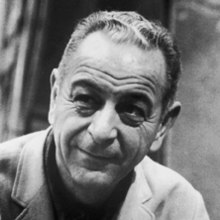 We would like to take a look at the man no one knows, Burton Lane. He wrote music for Broadway and the movies. He was the President of the American Guild of Authors and Composers and served on the Board of Directors of the American Society of Composers, Authors, and Publishers, better known as ASCAP. He started on Broadway, as co-composer and co-lyricist on Earl Carroll’s Vanities in 1931; wrote the score for Hold On to Your Hats in 1940, Laffing Room Only in 1944, Finian’s Rainbow in 1947, On a Clear Day You Can See Forever in 1966, We Bombed in New Haven in 1968 and Carmelina in 1979.
He wrote music for more than 30 movies, including the score for Royal Wedding in 1951 (with Fred Astaire dancing on the ceiling). In Hollywood, he will always be remembered as the man who discovered Judy Garland at age 13, singing with her sisters (The Gump Sisters) at the Paramount Theater. His great popular song, “How About You,” was written with Ralph Freed for the movie, Babes on Broadway, and was introduced in that movie by Judy Garland and Mickey Rooney.
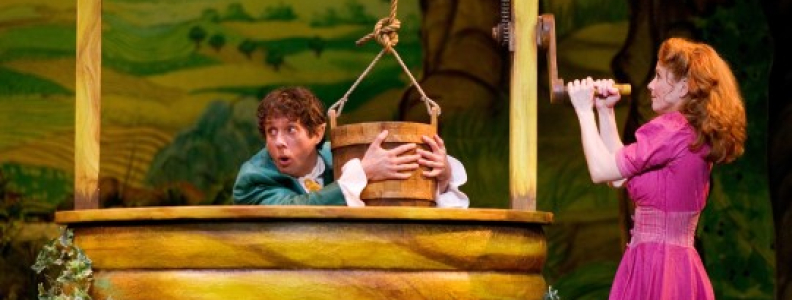
But, no matter what else he did, he will always be remembered for the score for Finian’s Rainbow, which is the focus of a series of posts. When Encores! in New York revived the show in 2009, Rob Berman, the music director, said that all of the songs were wonderful. We agree. From the opening choral number, “This Time of the Year ” to the ending reprise of “How Are Things in Glocca Morra,” the tunes were pitch perfect and gloriously diverse. There were Irish songs, mixed with Gospel and American folk songs; romance ballads and hoe downs; ballet and everything in between. It was and is glorious music, alive and full of energy. The lyrics were written by E. Y. (“Yip”) Harburg, who also wrote the book with Fred Saidy.
Normally, we provide some but not all of the songs written for the show; however, in this case, each number warrants inclusion. It seems as though Lane funneled all of his melodic energy into this musical, and we would dishonor his emory if we did not include the entire score. Further, we also have many versions of the songs, from the audio clips from the 1947 original cast recording to the 2016 revival by the Irish Repertory Theatre. What is startlingly evident is that all of the versions retain the initial vibrancy of the 1947 Broadway hit.
The show had a mostly unknown cast of excellent performers, one of whom (David Wayne) went on to have a brilliant career in supporting roles in movies, such as the “other man” in Adams Rib and Frank Sinatra’s pal in The Tender Trap. The show also was orchestrated by Robert Russell Bennett and Don Walker and choreographed by Michael Kidd.
The musical has been called a fantasy, as it has elements of myth, political humor and social commentary that no one takes seriously. They are all having too much fun with an improbable story told with affectionate humor.
An Irishman named Finian steals a pot of gold from a leprechaun in Ireland and has brought it to America in order to plant it in the rich soil that surrounds Fort Knox. Finian reasons that if Americans plant their gold in Fort Knox to make it grow, he should plant his near to Fort Knox in order that it will grow into a bigger fortune. He has dragged along his lovely daughter, Sharon, on this quixotic quest.
As luck would have it, the land picked out by Finian also supports sharecroppers, both black and white, who grow tobacco and live off the sale of the crop. However, they are behind on their taxes and so are being hounded to pay their taxes or be foreclosed.
At the same time, Finian is being chased by Og, the leprechaun from whom Finian stole the crock of gold. Because his gold is gone, Og is slowly turning into a mortal, which he finds has both its good and not-so-good sides.
Behind the Sheriff seeking to dispossess the sharecroppers, is Senator Rawkins, a bigoted, white, Southern politician, who has his own plans for the land.
The plot contains a very funny but confusing mix of plot elements but is held together by the myth of the three wishes.
The myth of the three wishes comes from an old fairy tale. In fairy tale, a man and his wife are granted three wishes. He loves sausages and foolishly wishes for all the sausages he can eat. Upset with her husband for making this wish, his wife says, in anger, that she wishes the sausages would grow off the end of her husband’s nose. Try as they might, they cannot stop the sausages from growing off the end of his nose. In despair, she uses her final wish to reverse her former wish. Thus, they wind up with nothing.
In the musical plot, any mortal standing near the pot of gold can make a wish that will come true. However, at the end of the third wish the gold will turn to dross. Mirroring the old fairy tale, Sharon uses the first wish to turn the Senator into a black man. Og uses the second wish to give Susan (a mute) the gift of hearing and speech. In order to save Sharon from a charge of witchcraft, Og sacrifices his immortality to use the third wish to turn the Senator back to being a white man. The gold disappears, but the valley ends with happiness all around. Except for Finian, who must continue to search for his own happiness elsewhere.
While the political views that underlie the plot may have been radical for its time (1947), they seem fairly tame in today’s polarized climate. Further, given our current fascination with wizards and magic, we can accept the premise of the crock of gold, a leprechaun turning mortal and the magic of the three wishes without blinking an eye. What is truly remarkable about the show is its score, a statement that is as true today as it was in 1947.
Without further ado, let’s listen to the original cast recording of the Overture from Finian’s Rainbow.
Now, we would like to share a video clip featured on Broadway.com that includes scenes from Encores! 2009 production of Finian’s Rainbow.
Similarly, we are also going to include a video clip of the 2016 Irish Repertory Theatre production of Finian’s Rainbow.
On Thursday, we will start our exploration of the first four songs of Act One.