
Frank Loesser–Not As Well-Know As He Should Be
Frank Loesser was born in New York City in 1910, went to same high school as Ira Gershwin and Yip Harburg (Townsend Harris High School) but was expelled. He then went to City College of New York (CCNY) without a high school diploma but failed all subjects but English and gym. He tried his hand at any number of odd jobs until he decided that he wanted to write lyrics for music publishers on Tin Pan Alley. He was not a musician, although from the age of four he could repeat any tune he heard on the keys of the family piano. According to Wikipedia, he was educated at home to learn the music of European composers, but he didn’t like that musical sound. Eventually, he learned how to compose on his own, although he worked with musical secretaries to put the musical scores on paper.
While working with music publishers on Tin Pan Alley, Frank struggled and failed to create any memorable songs with his collaborators.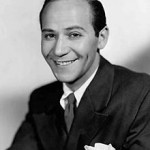
In 1936, he signed a contract with Paramount Pictures and left for Hollywood. His first assignment was to write the lyrics for an Alfred Newman tune–“Moon of Manakoora.” Among the many popular songs that he wrote at the time were two with Hoagy Carmichael (“Two Sleepy People” and “Heart and Soul”) and one with Burton Lane (“I Hear Music”).
However, two of his efforts were memorable: he wrote the lyrics for tunes written by Friedrich Hollaender (“See What the Boys in the Backroom Will Have”) and Jule Styne (“I Don’t Want to Walk Without You”). “See What the Boys in the Backroom Will Have” was sung by Marlene Dietrich in the famous 1939 western, Destry Rides Again. The film also starred Jimmy Stewart and Charles Winninger, who we remember as Captain Andy in Show Boat. Here is a brief video clip from the movie, featuring Marlene Dietrich, singing the song.
The second song is even more remarkable. “I Don’t Want to Walk Without You” was written for a film called Sweater Girl in 1942. The song was praised by Irving Berlin as a song he wish he had written. Here is an audio clip of Bing Crosby singing this song, recorded in the same year.
Frank Loesser served in the Army Air Corps during WWII, during which time he wrote the lyrics for a song with Joseph J. Lilley called “Jingle Jangle Jingle” (also known as “I’ve Got Spurs that Jingle Jangle Jingle”). It was during this period of time, with encouragement from the armed forces, that Frank started to write the music and lyrics for songs used in war time propaganda efforts, such as “Praise the Lord and Pass the Ammunition.” Another of those songs was “They’re Either Too Young or Too Old” seen in the 1943 movie, Thank Your Lucky Stars and sung by Bette Davis. Though not a singer, here is a video clip of Bette Davis doing her bit for Uncle Sam.
Also during this period of time, Frank got his first taste of a stage musical; he wrote the lyrics for a 1944 musical called Hi Yank! to be performed by and for US soldiers in battlefield situations that were off limits to the USO tours. The opportunities that Loesser had in the Army led to his first opportunity in civilian life, when, in 1948, he was asked by Cy Feuer and Ernest Martin to write both the music and lyrics for a George Abbott book, Where’s Charley? This musical was an adaptation of the successful London and Broadway play Charley’s Aunt, written by English actor, playwright and songwriter, Brandon Thomas, and first performed in 1892. Where’s Charley starred Ray Bolger, and it gave us one great song, “Once in Love with Amy.” We are providing an audio clip of Frank Sinatra who recorded the song with Columbia in 1948.
According to Wikipedia, in 1948, Frank Loesser also made history by selling one of his songs to MGM. He had written it in 1944 and had sung it at parties as a duet with his wife, Lynn Garland. The studio introduced the song the next year in a movie called Neptune’s Daughter, as a duet sung by two different couples, Esther Williams/Ricardo Montalban and Betty Garrett/Red Skelton. The movie also featured Xavier Cugat, the Spanish-born musician who we have previously discussed when we highlighted “The Shorty George” from the Jerome Kern movie You Were Never Lovelier. “Baby, It’s Cold Outside” was the song, and it went on to win the Academy Award for Best Original Song. Here is a video clip from Neptune’s Daughter.
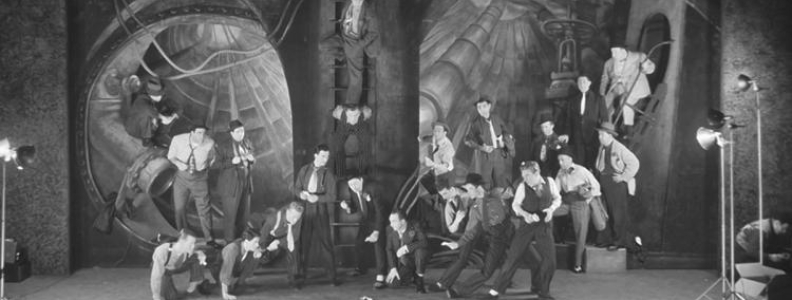
Loesser collaborated again with Feuer and Martin in 1950, this time in a musical with a book that had been extensively re-written by Abe Burrows, who was known on Broadway as the “play doctor.” The musical was an adaptation of several Damon Runyon stories, with choreography by Michael Kidd. It was entitled Guys and Dolls and went on to win two Tony Awards for Loesser. Bob Fosse called the show “the greatest musical of all time.” (The craps game scene is our featured image.)
In 1952, Frank wrote the music and lyrics for a Samuel L. Goldwyn movie, Hans Christian Anderson. It had a script by Moss Hart and Ben Hecht (uncredited). It starred Danny Kaye and featured a beautiful ballet choreographed by Roland Petit, who also dances the role of the Prince.
Loesser returned to Broadway in 1956 with a musical for which he wrote the book, the music and the lyrics. It was based on Sidney Howard’s play, They Knew What They Wanted. It was given the title The Most Happy Fella and has been called an opera by some. Stanley Green noted in his book, The World of Musical Comedy, that The Most Happy Fella “was one of the most ambitiously operatic works ever written for the Broadway musical theatre. Included among its more than thirty separate musical numbers were recitatives, arias, duets, trios quartets, and choral passages, yet all of them were created to fit within the framework of the commercial musical theatre.” The original Broadway production ran for 14 months and has been revived often, the last time by the New York City Opera in 2006.
It is ironic that the music Loesser rejected as a youngster became a part of his creative world later in life.
In 1960, Frank collaborated on the book with Lesser Samuels (an adaptation of a novel byB. J. Chute) and wrote the music and lyrics for Greenwillow, starring Anthony Perkins. It was directed by George Roy Hill and choreographed by Joe Layton. Many liked the score, although the show received lukewarm reviews.
In 1961 Feuer and Martin reunited Abe Burrows and Frank Loesser to create the remarkable satire, How to Succeed in Business Without Really Trying. The show starred a young Robert Morse and a great veteran from the 1930’s, Rudy Vallee. The musical numbers were staged by Bob Fosse, and the show ran for 1,417 performances. It won seven Tony Awards, the New York Drama Critics Circle award and the 1962 Pulitzer Prize for Drama.
Frank’s last effort, Pleasures and Palaces, closed during out-of-town tryouts in 1965. Frank passed away from lung cancer in 1969.
Next Tuesday, we will take a look at one of Broadway’s great musicals, Guys and Dolls.