Three Eras–Two Musical Forms
In our post from April 17, 2018, we discussed the efforts of Raymond Hubbell to get ASCAP formed. He was assisted by other composers, namely Victor Herbert, Silvio Hein, Louis Hirsch and Gustave Kerker. This effort was encouraged by the great Italian opera composer, Giacomo Puccini, during a visit in 1910. Puccini was used to protection of artistic intellectual property in Europe and was surprised it had not been instantiated in America.
In an oversimplification, in 1910, the Era of Opera was at an end; and the Era of Operetta was being transferred from European shores to America. At the same time, we were witnessing the birth of a new American sound that was just beginning to take shape. The Eras of Opera and Operetta came from the world of the classical music (form), while the world of American music came from many different and unique forms: folk songs, minstrel songs, Negro Spirituals, popular songs, rag time piano music, blues songs and a mixture of ethnic sounds from all over the world.
In this first segment of our series of posts on transitions in music from one era to another, we would like to look at European Opera and Operetta.
Let’s move back to Puccini’s visit, because it marked the end of the Era of Opera. In 1898, Puccini’s first and perhaps his best known opera, La Boheme premiered in New York; in 1907, his most heartbreaking opera, Madama Butterfly, had made its New York premiere. In 1910, he attended the premiere of his last, three-act opera, The Girl of the Golden West.
In Madama Butterfly, we have a simple story of an American officer, Lt. Pinkerton, stationed in Japan who carelessly marries a Geisha, Madama Butterfly, gets her pregnant and then leaves on his next assignment. Madama Butterfly views her marriage as a binding obligation, raises the child on her own and waits patiently for the return of her husband. When he does return, he returns with his American wife for the purpose of taking away his son. We, the audience, know of his deception long before Madama Butterfly knows. In this magnificent aria, called “Un bel di vedremo,” Butterfly imagines how her husband will come to her, calling her “little one, dear wife.”
When she learns the truth and knows she has been disgraced, Madama Butterfly decides that an honorable life is impossible and so decides to die with honor–a ceremony called sepuku. Pinkerton finally understands the tragedy that he has caused and takes her lifeless form in his arms in horror.
Here now are two versions of the aria. The first is Rosa Ponselle from a 1919 recording, with English lyrics added; the second is a video recording of Renata Tebaldi.
The dazzling array of operatic beauty that started with Wolfgang Amadeus Mozart in the 1780’s ended one-hundred-and-thirty-years later. While we still enjoy listening to the scores of Mozart, Rossini, Donizetti, Meyerbeer, Wagner, Verdi, Gounod, Bizet, Offenbach, Delibes, Massenet, Smetana, Moussorgsky, Ponchielli, Mascagni, Leoncavallo, Catalani and Puccini, among others, the outpouring of grand and comic opera ended for the same reason that all eras end–when we can find no new great composer capable of continuing and expanding the art form.
While not as well known as the European composers listed above, Michael William Balfe (1808-1870) created a number of opera scores (at least 29 produced in London at Drury Lane), some of which found their way to New York, including The Maid of Artois in 1836, The Bohemian Girl in 1843, The Enchantress in 1845 and Satanella in 1858. The Bohemian Girl and The Enchantress were revived regularly on Broadway. The most famous aria from The Bohemian Girl was “I Dreamt I Dwelt in Marble Halls.” It has many admirers, and many recordings have been made.
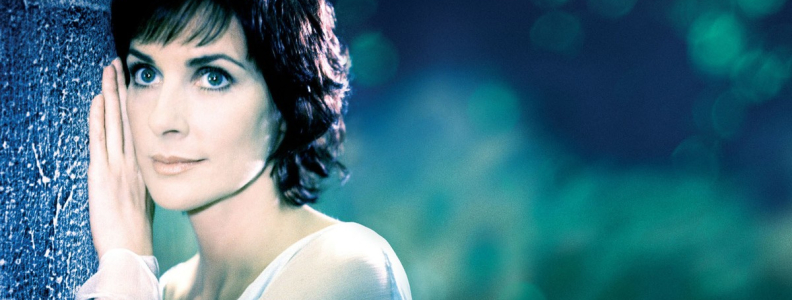
We have found three versions that we feel capture the spirit of this enchanting aria, which is also known as “The Gipsy Girl’s Dream.” The first is sung by Enya and has the lyrics added to the video clip.
The second is an audio clip from a recording of Joan Sutherland with the London Symphony Orchestra, directed by Richard Bonynge. Note the same steady tempo that lulls you into a dream, where we begin to believe that the dream can become reality.
Finally, we have the wonderful Sissel Kyrkjebo singing a shortened version of the aria in concert with a chorus, similar to the chorus accompanying Enya.
At the same time opera was reaching its zenith, another form of musical theatre was just getting started in Europe. Jacques Offenbach (1819-1880) wrote one opera, Les Contes d’Hoffmann, which was first performed in the year after Offenbach’s death (1881). He wrote nearly 100 operettas, and some are regularly revived in New York, such as La Grande-Duchess de Gerolstein, which first debuted in New York 1867.
Other French composers enjoyed runs on Broadway for their operettas, including Charles Lecocq, Herve, and Robert Planquette.
Franz von Suppe had his moment in the German sun, with his Poet and Peasant in 1846 and Light Cavalry in 1866. The Overture from Light Cavalry is quite well-known to the ear. We are going to give you a visual and audio treat, as the Berliner Philharmoniker plays the Overture.
Meanwhile, W.S. Gilbert and Arthur Sullivan made history in England with their fourteen comic operas from 1871 to 1896. We have chosen two songs, one from The Pirates of Penzance and one from The Mikado.
Our first selection comes from the Central Park Delacorte Theater, with Kevin Kline and Linda Rondstadt–“I Am the Model of the Modern Major-General.”
The second selection is a delightful trio singing “Three Little Maids from School” from The Mikado.
Of course, we have the immortal Austrian composer, Johann Strauss II, who sent his Die Fledermaus to New York in 1879, The Queen’s Lace Handkerchief in 1882 and The Gypsy Baron in 1886. In a recent post, we played the Overture from Die Fledermaus, and it is probably the best overture ever written for an operetta. Bar none.
Finally, Franz Lehar sent over his oft-produced The Merry Widow for the first time in 1907, and Oscar Strauss provided New York with the premiere of The Chocolate Soldier in 1909. We would like to leave you with Jeanette MacDonald singing “My Hero” from The Chocolate Soldier.