
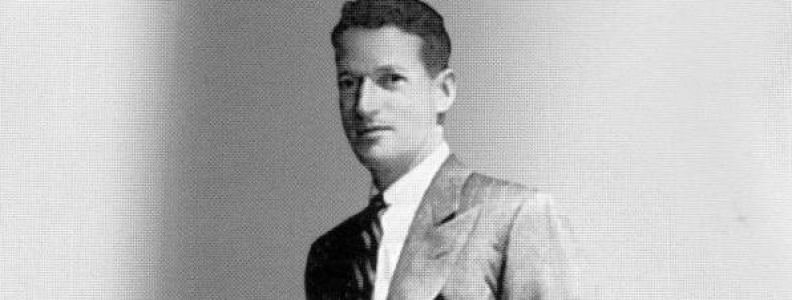
Conrad Salinger–Gershwin, Berlin, Kern and Porter
Fred Astaire and Joan Fontaine
We have looked at the work of any number of orchestrators and are about to make a transition from Victor Baravalle and Robert Russell Bennett to Conrad Salinger. We will start with a brief exploration of the last full score written by George Gershwin for the screen–A Damsel in Distress (1937), released shortly after George’s death in 1937. A Damsel in Distress involved a close collaboration between Baravalle and Bennett, because of Gershwin’s illness in 1937. We will then look at the collaboration among Baravalle, Bennett and Salinger as they worked on Irving Berlin’s 1938 movie Carefree, the last of the RKO Fred and Ginger movies. But first a word about Salinger.
Conrad Salinger (1901-1962) graduated from Harvard in 1923, then studied at the Paris Conservatoire under Andre Gedalge. He returned to New York in 1929, where he was hired by T.B. Harms and worked with Robert Russell Bennett, Hans Spialek, Edward Powell, Maurice De Packh and others. He is credited with arranging music for Broadway shows from 1931 to 1938 and worked in Hollywood for Alfred Newman on Born to Dance (1936) and Gunga Din (1939). He left RKO to work with Roger Edens and Lennie Hayton at MGM, where Salinger orchestrated most of the musicals, including Strike Up the Band (1940), Ziegfeld Girl (1941), Lady Be Good (1941), Panama Hattie (1942), For Me and My Gal (1942), You Were Never Lovelier (1942), Girl Crazy (1943 version), Meet Me in St. Louis (1944), Ziegfeld Follies (1945), The Harvey Girls (1946), Till the Clouds Roll By (1946), Good News (1947), Easter Parade (1948), Words and Music (1948), The Barkleys of Broadway (1949), That Midnight Kiss (1949), On the Town (1949), Annie Get Your Gun (1950), Three Little Words (1950), The Toast of New Orleans (1950), Summer Stock (1950), Royal Wedding (1951), The Great Caruso (1951), Show Boat (1951 version), An American in Paris (1951) Singin’ in the Rain (1952), The Band Wagon (1953), Kiss Me, Kate (1953), Seven Brides for Seven Brothers (1954), Hit the Deck (1955), It’s Always Fair Weather (1955), Kismet (1955), High Society (1956), Funny Face (1057), Silk Stockings (1957) Gigi (1958), Porgy and Bess (1959) and ballet sequences in Brigadoon (1954).
It is sometimes very hard for an audience to understand just what an orchestrator does; we have covered this subject in depth in the website Segment on orchestrators; however, that Segment is more focused on our Broadway orchestrators. While the same principles apply to Hollywood orchestrators, there are differences. One of the biggest differences between the Broadway stage and the silver screen is “distance.” The stage is far away, and the audience must follow what happens onstage from stage right to stage left. While the use of lighting can help to guide the audience from a wide view to one singer in the spot light, the screen uses a much more intimate technique–the close up.
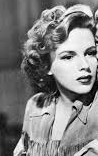
Judy Garland
An example is the song “But Not For Me” from the movie version of Girl Crazy. Judy is being chased by all the men, but she does not believe that she will ever find love. In a carefully staged confession to a seated Rags Ragland, almost like a Shakespearean soliloquy, she shares her feelings with the audience. Note Salinger’s careful choice of strings and winds in the music, as he chooses to highlight the singer and not the orchestra.
If we compare this version with the stage version in the Roxbury restoration recording of Girl Crazy, we can immediately tell the differences between the two orchestrations. The Broadway version stays closer to the original up-tempo, jazz sound, while the movie version uses a softer sound to emphasize the intimate nature of the “song as confession.”
Salinger worked on music written by Gershwin (A Damsel in Distress, Lady Be Good, Girl Crazy, An American in Paris, Funny Face and Porgy and Bess); on Berlin scores (Carefree, Easter Parade and Annie Get Your Gun); on Kern music (You Were Never Lovelier, Till the Clouds Roll By and Show Boat); and on Porter scores (Panama Hattie, Kiss Me, Kate, High Society and Silk Stockings). Some of these movies were adaptations from Broadway shows, such as Strike Up the Band (even though only one Gershwin song was used), Lady Be Good, Panama Hattie, Girl Crazy, Good News, On the Town, Annie Get Your Gun, Show Boat, The Band Wagon, Kiss Me, Kate, Hit the Deck, Kismet, Funny Face, Silk Stockings, Porgy and Bess and Brigadoon.
We are going to have a really good time as we follow Salinger’s work. But first, let’s take a quick look at two songs that came from the collaboration of Gershwin, Baravalle and Bennett. The first is “A Foggy Day (in London Town).” One commentator said that Astaire “danced” on the street because even his walking was so well choreographed.
The second is supposed to be a song and dance between Fred Astaire and Joan Fontaine; however, Joan was not a dancer, so George Stevens, the director, used scenery as props to help Joan along. Here is “Things Are Looking Up.”
Finally, let’s take a look at the collaboration of Baravalle, Bennett and Salinger on the movie, Carefree. From that movie, we have chosen the great Berlin tune, “Change Partners,” as the clip to watch.