
Every Now and Then, The Soul Needs Feeding
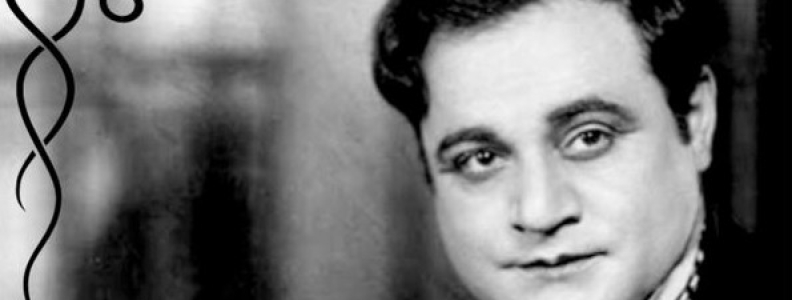
The featured image is a portrait of Beniamino Gigli, and I will explain later in this post why his picture is being featured. However, right now, I have the need to share. As you know, every now and then, I leave the real world and get into some personal fantasy world that has nothing whatsoever to do with the JMV Art Preservation Foundation or Broadway musicals. This is more than just a mere left turn; I am definitely off the reservation.
I taped a show on the Hallmark Channel (please no jokes or snide remarks about the channel), and I finally finished with an analysis of the non-seasonally adjusted employment surveys (my day work as an economist). So, I fixed a little Matcha Green Tea and sat down to view the tape; and yes, it is an old VHS tape played on a VHS machine. There is a reason my friends call me a Luddite, and it isn’t just because I don’t send texts or own a microwave. Part of me remains mired in the late 1940’s, just after WWII, when I could listen to the radio and hear opera, musicals, calypso, jazz, swing, classical, country and western, pop, folk, Irish folk, Edith Piaf–you name it; the radio carried it.
In my day, the day of almost unlimited variety on commercial radio, stations “pushed” the music out to the listening audience over the airwaves; and we tuned into the station that was esthetically pleasing to our ears at that particular moment.
Today, we have play lists based on streaming audio files. It is what is known as a database that is created through the use of “pull” technology. The user defines the music and the engine searches for it. Your service then stores the data and replays it whenever you say the magic words, “play xxx.”
But you all are smart, and so you immediately see the limitation built into the “pull system.” You only create playlists of music that you know and like. The rest of the world of music remains a total mystery.
I perceive the cable tv “model” in much the same way I saw radio in the late 1940’s. I will sometimes not know what I want to watch and will just start flipping through the channels. It is as though I were challenging the system to find me something that will spark some interest and get me out of my current state of boredom. I bore easily, which is why I need to find new historically interesting subjects to share with you all. In this regard, I am very similar to a friend of mine in Nevada. He is a licensed pilot, has a wizard sharp mind, has any number of patents to his name and regards all new inventions as play toys. He gets interested in a new technology, such as bitcoin, writes copiously about them and then, after he learns all of the internal magic, gets bored and moves on to the next subject.
Tea pot in one hand and clicker in the other, I settled down to watch the movie and skip the commercials. Unfortunately, I did not bring the box of tissues. The movie that I recorded was The Christmas Shepherd, and it involved an army dog that gets frightened by thunder and lightning and runs away from home. His owner is the widow of an Army vet, a woman who is a well-known author of children’s books. She frantically searches for Buddy, her very expressive German Shepherd. Through a series of rescues, reminiscent of Lassie Come Home, the dog is saved by a single father and his daughter who are still grieving over the loss of their wife/mother to cancer a few years earlier.
Eventually, the dog brings these lost souls together, lifts them out of their state of numbness and brings them back into the world of the living.
It is not a great movie; it is a good movie. The actors are not great actors; they are good actors. Yet, the movie served a very useful purpose: it fed me.
Every now and then all of us need some food for our souls; we need something that will both ground us in good and lift us into a better experience. Our souls have a connection to the universe that is quite unknown to science, although great scientists who were also great philosophers, like Albert Einstein, felt the power of this spiritual sense of “things not seen.” Here is one of his best quotes on the subjects of science and art: “This situation may be expressed by an image: science without religion is lame, religion without science is blind.”
I might substitute the word “spirituality” in place of religion, but that is being pedantic.
The point is that occasionally we need to get our spiritual tank filled up to the brim, so we can continue to move forward.
Although I like movies, my most regular form of spiritual food is music. TA-DA! After over 800 words, I finally got to the point. In the space of three to four minutes, I can get a jolt of interplanetary energy that can carry me many miles.
One of those elixirs is the tenor aria, “E la solita storia del pastore” or “Lamento di Federico,” from Act 2 of Francesco Cilea’s opera, L’arlesiana. The tenor is in love with L’arlesiana, a woman from Arles, but is being forced by his family to marry his childhood playmate, Vivetta. In this aria Federico is reading L’arlesiana’s old love letters:
It’s the old tale of the shepherd…
The poor boy wanted to retell it
And he fell asleep.
There is oblivion in sleep.
How I envy him!
I too would like to sleep like that
To find oblivion at least in slumber!
I am searching only for peace.
I would like to be able to forget everything!
Yet every effort is in vain.
Before me I always have
her sweet face.
Peace is ever taken from me.
Why must I suffer so very much?
She, as always speaks to my heart.
Fatal vision, leave me!
You hurt me so deeply! Alas!
I tried to find a recording by Enrico Caruso; however, I struck out on youtube. I did find an early recording of Beniamino Gigli singing this aria with a gentle, lyrical ennui. And that is why his picture is the featured image for this post.
Around the same time (1928), an early recording of Victor Herbert’s “Ah, Sweet Mystery of Life” was made by Richard Crooks. While this song was not as melancholy as Cilea’s aria, it shows the ability to move from opera to operetta without missing a beat; and in both cases, they fill me up and my cup runneth over.
Thank you for staying on this short journey to a little bit of heaven; on Thursday, we return to George M. Cohan and his patriotic masterpiece, George Washington, Jr.