
George Washington, Jr.
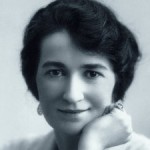
The featured image gives us a look at Ethel Levey, George M. Cohan’s first wife. She performed with him in a number of shows, including playing the role of Dolly Johnson in George Washington, Jr., the niece of Senator Hopkins. Jerry Cohan, George’s real life father, played Senator Belgrave in the musical, and George M. Cohan played the senator’s son, George Belgrave. The stage name, George, may not be original, but at least the actor knew when they were calling his name. George M. Cohan’s mother, Helen, played Mrs. Stebbins, the widowed sister of Senator Belgrave. Recall that Josie was married by this time and no longer performing on stage.
What is amazing is that the story of the show is not far removed from today’s news headlines. The plot involves a feud between two senators, Belgrave and Hopkins, wherein each senator attempts to find or create some form of corruption on the plate of the other man. On top of that Senator Belgrave, according to Gerald Bordman in his chronicle on the American Musical Theatre, is “an Anglophile boastfully contemptuous of the country he serves.” Senator Belgrave wants to arrange a marriage between his son, George, and Lord Rothburt’s “languid, arrogant daughter, Evelyn.”
 George, however, loves Dolly Johnson. In order to cool the romance between George and Dolly, Senator Hopkins tells Dolly that George is going to marry Evelyn. Dolly expresses her displeasure to George, and George parts ways with his father. “I disown you as a father. Now what do you think of that!” The senator tells George that he is a disgrace to the name of Belgrave, to which George replies: “Take your name! I don’t want your name! I’ll take my own name.” Because they are visiting Mount Vernon at the time, as part of an excursion, showing Lord Rothburt and his daughter the sites of Washington, D. C., George decides that he will take the name of Washington, giving himself the new name, George Washington, Jr., and freeing himself at the same time of any obligation to marry Evelyn.
While George’s actions satisfy Dolly, Senator Hopkins continues the feud, much like the Montague’s and the Capulet’s. Senator Hopkins still objects to any marriage between Dolly and George until a monument is built to honor George Washington, Jr.
Like all good melodramas, Senator Hopkins is found to have some dirt on his hands, too; he has set up the fictitious Lord Rothburt and his daughter to trap Senator Belgrave. When George learns that there is no real Lord Rothburt, he tells his father about Senator Hopkins’ plot. Senator Belgrave is chastened and in gratitude “offers to erect a monument to his son.” Senator Hopkins gives his consent, and all ends well.
Now, let’s move on to the score. There are only ten musical numbers in the show, and we are going to concentrate on numbers two and three.
The second musical number is called “Virginia” and was a solo number for Dolly Johnson. According to Bordman, the number was a “show-stopper” for Ethel. We have a clip from Yankee Doodle Dandy, in which the number was staged as a vaudeville routine for the Four Cohans. Hollywood never let historical truth stand in the way of a good choral number, so out went Ethel’s solo and in came the quartet, now called “I Was Born in Virginia.”
Of course the third song in the show is the immortal “You’re A Grand Old Flag.” Except that on opening night, the song was called “The Grand Old Rag.” For a super patriot like Cohan, it is unthinkable that the title would have been intended to slight our flag; however some people took offense and the name was changed.
As always, there is a story behind the use of the word, “rag.” Here is what we found on youtube.
The title and first lyric comes from someone Cohan once met; the Library of Congress website notes:
The original lyric for this perennial George M. Cohan favorite came, as Cohan later explained, from an encounter he had with a Civil War veteran who fought at Gettysburg. The two men found themselves next to each other and Cohan noticed the vet held a carefully folded but ragged old flag. The man reportedly then turned to Cohan and said, “She’s a grand old rag.” Cohan thought it was a great line and originally named his tune “You’re a Grand Old Rag.” So many groups and individuals objected to calling the flag a “rag,” however, that he “gave ’em what they wanted” and switched words, renaming the song “You’re a Grand Old Flag.” — Library of Congress. In the play itself, the scene with the Civil War soldier was replicated. The soldier’s comment was the lead-in to this song. Thus the first version of the chorus began, “You’re a grand old rag / You’re a high-flying flag”. Despite Cohan’s efforts to pull that version, some artists such as Billy Murray had recorded it under its original title, “The Grand Old Rag”, in advance of the play’s opening, and copies under that title still circulate among collectors. Cohan’s second attempt at writing the chorus began, “You’re a grand old flag / Though you’re torn to a rag”. The final version, with its redundant rhyme, is as shown below.”
Verse 1
There’s a feeling comes a-stealing,
And it sets my brain a-reeling,
When I’m list’ning to the music of a military band.
Any tune like “Yankee Doodle”
Simply sets me off my noodle,
It’s that patriotic something that no one can understand.
“Way down South, in the land of cotton,”
Melody untiring,
Ain’t that inspiring?
Hurrah! Hurrah! We’ll join the jubilee!
And that’s going some, for the Yankees, by gum!
Red, White and Blue, I am for you!
Honest, you’re a grand old flag!
Chorus
You’re a grand old flag,
You’re a high-flying flag,
And forever in peace may you wave.
You’re the emblem of the land I love,
The home of the free and the brave.
Ev’ry heart beats true
‘Neath the Red, White and Blue,
Where there’s never a boast or brag.
But should auld acquaintance be forgot,
Keep your eye on the grand old flag.
Verse 2
I’m no cranky hanky panky,
I’m a dead square, honest Yankee,
And I’m mighty proud of that old flag that flies for Uncle Sam.
Though I don’t believe in raving
Ev’ry time I see it waving,
There’s a chill runs up my back that makes me glad I’m what I am.
Here’s a land with a million soldiers,
That’s if we should need ’em,
We’ll fight for freedom! Hurrah! Hurrah!
For ev’ry Yankee Tar A
nd old G.A.R., ev’ry stripe, ev’ry star.
Red, White and Blue, hats off to you!
Honest, you’re a grand old flag!
The first recording was made by William Thomas “Billy” Murray (1877 to 1954). He was one of the most popular singers in the United States in the early decades of the 20th century. While he received star billing in Vaudeville, he was best known for his prolific work in the recording studio, making records for almost every record label of the era. Here is his version of the song.
Ok, let’s move on to the main course. Here is the clip from Yankee Doodle Dandy, complete with “Battle Hymn of the Republic,” “When Johnny Comes Marching Home” and “My Country ‘Tis of Thee.”
Finally, we have a recreation of both pieces of music, orchestrated, arranged and played by Rick Benjamin and the Paragon Ragtime Orchestra.
We will see you next week, when we feature the third wonderful show from 1906, The Red Mill by Victor Herbert.