
Mlle. Modiste–Part Two
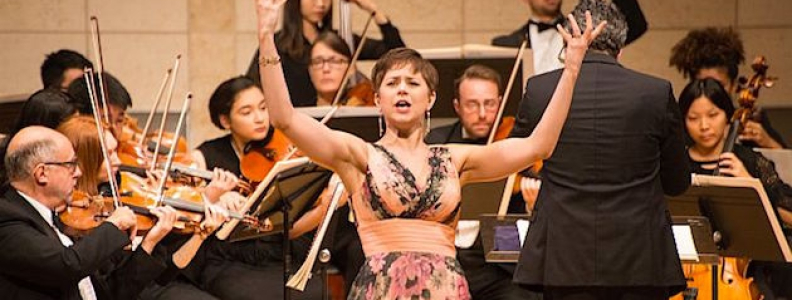
We are taking one of those occasional left-hand turns that we have taken in the past; only this time, we are sticking to our subject matter, which is the music from Mlle. Modiste. However, for those of you scratching your heads about the people in the featured image, we need to explain. The image is taken from a newspaper review of a recital that was part of the centennial celebration of the San Francisco Conservatory of Music. The recital was undertaken in a collaboration between the newly formed Theatre Comique and the SFMC orchestra. The force behind the collaboration is Corey Jamason, a professor at SFMC and a man dedicated to the preservation of Broadway shows staged between 1890 and 1930. Its mission statement is quite similar to that of our Foundation: “Theatre Comique is dedicated to the revival of early American musical theatre. Applying the principles of the early-music movement to the repertoire of the Broadway stage, Theatre Comique utilizes historically informed performance practices and original orchestrations to recapture the original sound and energy of American musicals that opened between 1890 and 1930. Our mission is to re-establish this repertoire as a staple of American musical culture through virtuosic and innovative performances.”
The mission is laudable, and we hope we can work with Theatre Comique in the future.
The problem we all face is summed up in the review:
“On the program: excerpts from Victor Herbert’s The Enchantress, Mlle. Modiste, Naughty Marietta, and Jerome Kern’s The Laughing Husband, Leave It to Jane, and Very Good Eddie.
“Scratching your head? So did your reporter, even though I hail from the land of Lehár and Kálmán, champions of European operetta, and I am a great fan of Broadway musicals,… But Theatre Comique — probably named after the Broadway theater that opened in 1862 — came up with six titles only one of which is vaguely familiar: Naughty Marietta.
“Young soloists, a Conservatory ensemble, and the mixed student-faculty SFCM Orchestra, conducted by Jamason, all did their best, even if most of the music revealed the reason for the neglect of these works. For Herbert, that was no surprise, but from Kern — who wrote more than 700 songs used in over 100 musicals and films — these early “light operas” were disappointingly monotonous and saccharine-laden.”
Of course, this review reveals much about the reviewer; mostly it indicates an incredible lack of music appreciation and education. But this attitude is not that unusual and reflects the current state of affairs: as a nation, we just don’t know that much about our musical heritage. This only serves to emphasize the need to acquaint the public with this music in a more informal but instructive manner.
And this, of course, brings us back to the subject of today’s post; last week we listened to Gems from Mlle. Modiste recorded in 1910 and the more modern 1951 radio concert.
In this post, we would like to feature the overture played by the SFMC orchestra and conducted by Corey Jamason.
One of the lovely songs from the show is Etienne’s complaint embedded in the song, “The Time, the Place and the Girl.” Here is a recording of the song by Reader’s Digest around 1963; it is sung by Arthur Rubin, under the conductor’s baton of Lehman Engel.
Etienne’s uncle, Henri, has a very simple code of conduct: “I Want What I Want When I Want It.” Here is a recording of a radio broadcast from 1943, sung by baritone, Robert Merrill.
Next, we have Sara Ann Mitchell singing “If I Were on the Stage,” from the Ohio Light Opera recording of the show.
Our final song in this post will be the Ohio Light Opera recording of the full Act One Finale (we heard an excerpt from the Railroad Hour).
We will finish up with the rest of score next Tuesday.