That Midnight Kiss, The Toast of New Orleans, The Great Caruso
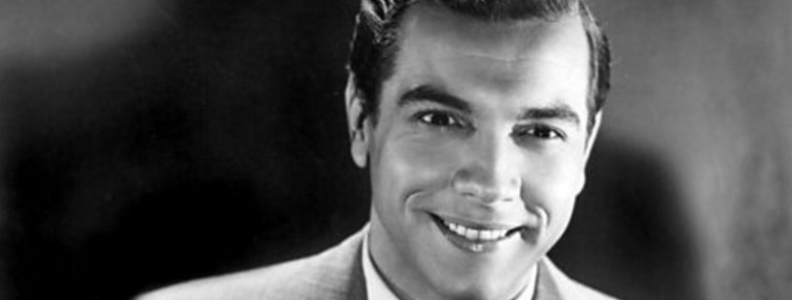
We have come to Conrad Salinger’s next project, That Midnight Kiss (1949). However, it is almost impossible to discuss this one movie by itself. In fact, we need to go backwards from 1949, in order to go forward, because there are a series of events associated with one extraordinary man, described by Placido Domingo as a vocal “force of nature.” Born Alfred Arnold Cocozza in 1921, author Eleonora Kimmel likened him to a meteor that blazed across the heavens, “whose light lasts a brief moment in time.” We know of this American tenor as Mario Lanza, a stage name taken from his Mother’s maiden name, Maria Lanza. His singing career lasted for only ten years; however his impact goes on to this very day. Jose Carreras and Domingo credit Lanza with having influenced them to become opera singers. Carreras said: “If I’m an opera singer, it’s thanks to Mario Lanza.” Domingo noted in a 2009 interview, “Lanza’s passion and the way his voice sounds are what made me sing opera.” We have the legacy of his RCA recordings, some live broadcasts and a few movies because, by 1959, Mario was gone. With some guidance and a firm foundation in an established opera company, things might have been different. Composer, conductor and arranger Johnny Green played a key role in nurturing Mario’s talent during his short stay at MGM. According to Wikipedia, Green explained Mario’s basic insecurity to be centered in how Mario rose to fame in the movies without first having proven his worth in opera. “Had [Lanza] been already a leading tenor, if not the leading tenor at the Met, and come to Hollywood in between seasons to make a picture, he would have had [the security of having] the Met as his home.” Green called Lanza “the voice of the next Caruso.”
Indeed, Enrico Caruso’s son, Enrico Caruso, Jr., wrote “I can think of no other tenor, before or since Mario Lanza, who could have risen with comparable success to the challenge of playing Caruso in a screen biography… Lanza was born with one of the dozen or so great tenor voices of the century, with a natural voice placement, an unmistakable and very pleasing timbre, and a nearly infallible musical instinct.” While Caruso was a dramatic tenor, it is possible for a big-voiced spinto tenor to sound very much like a dramatic tenor. Licia Albanese, a soprano with the Met, said this of Lanza in 1980: “He had the most beautiful lirico spinto voice. It was a gorgeous, beautiful, powerful voice. I should know because I sang with so many tenors.” Albanese spent 26 seasons at the Met; she sang a duet with Lanza in Act I from Verid’s Otello in the movie, Serenade, made by Warner Brothers in 1956.
Who was this man? Why did he love opera so intensely only to get lost in Hollywood? What were the internal demons that compelled him to find solace in food and drink? Why did his wife, Betty, die of a drug overdose only five months after Mario’s death? We have few answers; all we can do is to share some of his music with you, help you to understand his strengths and weaknesses and hope that you will appreciate his contribution to the world of music, stretching from opera to operetta to popular song. We will concentrate on the three movies that Salinger worked on (That Midnight Kiss, The Toast of New Orleans and The Great Caruso), but we will augment music from these movies with music from other sources. Obviously, anything with this scope cannot be contained in one post, so we will take our time as we explore Mario’s body of work.
Lanza signed a recording contract with RCA in 1945, but he had to postpone his professional singing career until his service in the Air Force had been completed. In 1947, Mario was in California and was asked to substitute at the last minute for a tenor who had to bow out of his scheduled appearance. One man’s loss is another man’s opportunity. Louis B. Mayer heard Mario and signed him to a seven year contract. Financially, this proved to be a blessing; professionally, this proved to be a curse, because it limited Mario’s ability to pursue an operatic career as he had planned (6 months in the movies and 6 months singing on the opera stage). The first time (to our knowledge) that Lanza was paired with the MGM soprano, Kathryn Grayson, was in July 1948, when he sang the magnificent Victor Herbert duet from Eileen with her in a live performance at the Hollywood Bowl (“Thine Alone”). You will hear Mario’s voice at the outset, as he introduces the recording.
While this first duet was not from an opera, it is considered by all professional singers to be “operatic.” Almost all tenors and sopranos from the world of opera at one time in their careers sang this duet. It is both beautiful and challenging for the trained voice, especially as the ending takes the two singers to a high C. In many ways, for you opera fans, this duet is similar to the end-of-act duet between Rodolfo and Mimi in Puccini’s La Boheme (“O soave fanciulla”). Quite often, the tenor will not take the ending high C in this duet, leaving the soprano with the honors, while the tenor provides an harmonic undertone. To give you a flavor of Enrico Caruso’s voice (dramatic tenors can sing baritone roles), here is a very ancient recording of Caruso and Nellie Melba, the great Australian soprano, singing “O soave fanciulla.” Note the restrained nature of this love song, as both singers express their love in soft, tender tones.
Lanza recorded his first four songs for RCA in the 1949/1950 time period. One of them was the magnificent “Che gelida manina” sung just a bit earlier in Act I of La Boheme, as the penniless Rodolfo introduces himself to Mimi. This was recorded in May 1949.
Here is a remastered recording of Enrico Caruso from 1906. Listen to the similarities, as both Caruso and Lanza sing this very demanding music with both ease and carefully controlled passion.
We know from past responses that many of you are not big opera lovers. However, let us draw your attention to the cross-over market for singers. The young television and movie star, Emmy Rossum, studied for the opera before she found roles in other areas. In order to be taken seriously, every singer should have classical vocal training. Second, it is impossible to understand fully our beloved Broadway show music, such as “Ol’ Man River,” without having some understanding of operatic music, whether from opera or operetta. Third, we just love listening to the music as we select illustrations for each post. Finally, if you love Lanza, learn about Caruso.
We are going to leave you with Part One of a 2009 BBC Radio 2 recording of The Mario Lanza Story, and we will pick up with That Midnight Kiss in the next post.