
The Yin and the Yang of Jerome Kern
According to Wikipedia, “In Chinese philosophy, yin and yang…describe how seemingly opposite or contrary forces may actually be complementary, interconnected, and interdependent in the natural world, and how they may give rise to each other as they interrelate to one another.” This seeming contradiction is best exemplified in the world of music by the body of work created by Jerome Kern. His tunes could capture the old world of operetta, the new world of African-American Gospel, spirituals and jazz or create a new American, popular sound that was at the same time eerily familiar. In 1914, Kern wrote the song, “They Didn’t Believe Me” for the show The Girl From Utah. We have played this song for you previously.
Listen to it again as we present a fair replication of the original orchestration from That Midnight Kiss (1949). The duet is sung by Mario Lanza and Kathryn Grayson in an artfully restrained version. Doesn’t it sound contemporary; couldn’t it have been written yesterday? The skill of the greatest composers is singular, whether we are discussing Beethoven or Kern–their music never sounds dated.
In our multi-part series on Show Boat, we showed how Kern’s operetta songs (“Make Believe,” “You Are Love” and “Why Do I Love You”) must be sung by voices trained for opera; that is how good but demanding the songs are. We showed that “Can’t Help Lovin’ Dat Man” and “Bill” are not jazz tunes but clearly show the influence of the blues on each composition. Finally, we showed how Kern came up with one song, a mixture of Gospel and operetta, that defined both his career and Broadway forever–the immortal “Ol’ Man River.”
Thus, we have in one composer all three strains of American music–operetta, jazz and popular music.
As we continue to look at the orchestrations of Conrad Salinger at MGM, we are going to focus on Kern’s score for You Were Never Lovelier (1942), although we have to note that Salinger also provided the orchestrations for That Midnight Kiss. We are going to start our examination of You Were Never Lovelier with the title song.
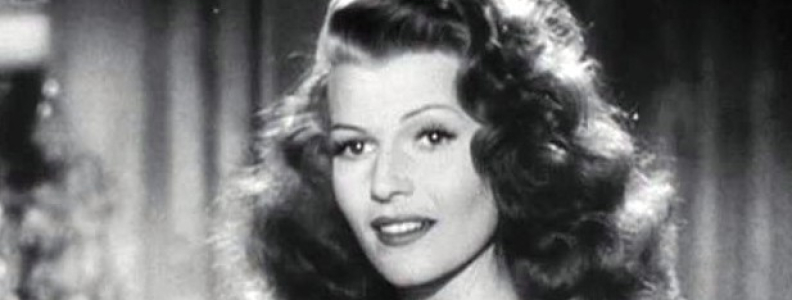
When Fred Astaire told Rita Hayworth that she was beautiful, we knew that he was not acting. But we didn’t necessarily realize how seamlessly Kern blended the music with the scene. The reluctant lady wound up gracefully forgiving the brash American. The song shifted the odds from negative to positive, all in under three minutes. Unlikely? Not if Jerome Kern is helping you.
It is hard enough to win the hand of your beloved once; but, in this movie, Astaire must woo and win Hayworth more than once. Listen as he starts his first campaign with the song “Dearly Beloved.”
This song is characterized by the distance between the two stars, love by telegraph. His heart is breaking, but she doesn’t seem to care. She is involved in her sister’s wedding, not her own. Fred is being helped by Xavier Cugat’s orchestra and lyrics by Johnny Mercer.
When Rita and Fred are finally alone, it is necessary to find common ground. Again, Mercer’s lyrics and Kern’s melody permits us to believe that Fred and Rita were just some ordinary folks in a garden with the song “I’m Old Fashioned.”
That takes us to the last music of the movie, a song that we covered in our section on swing orchestrations. “The Shorty George” is the one song not arranged nor orchestrated by Conrad Salinger (arranged by Lyle (Spud) Murphy), but it is such a delight for dancers and singers of all ages that we just had to include it. Note how the same composer shifted gears from the popular love songs we have been listening to and jumped into a swing number.